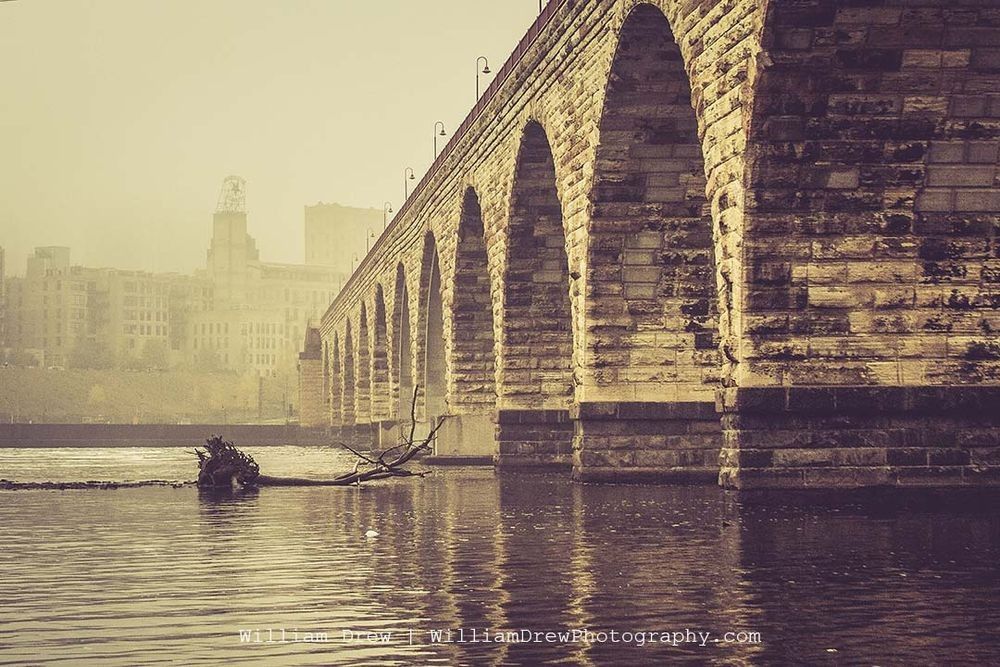
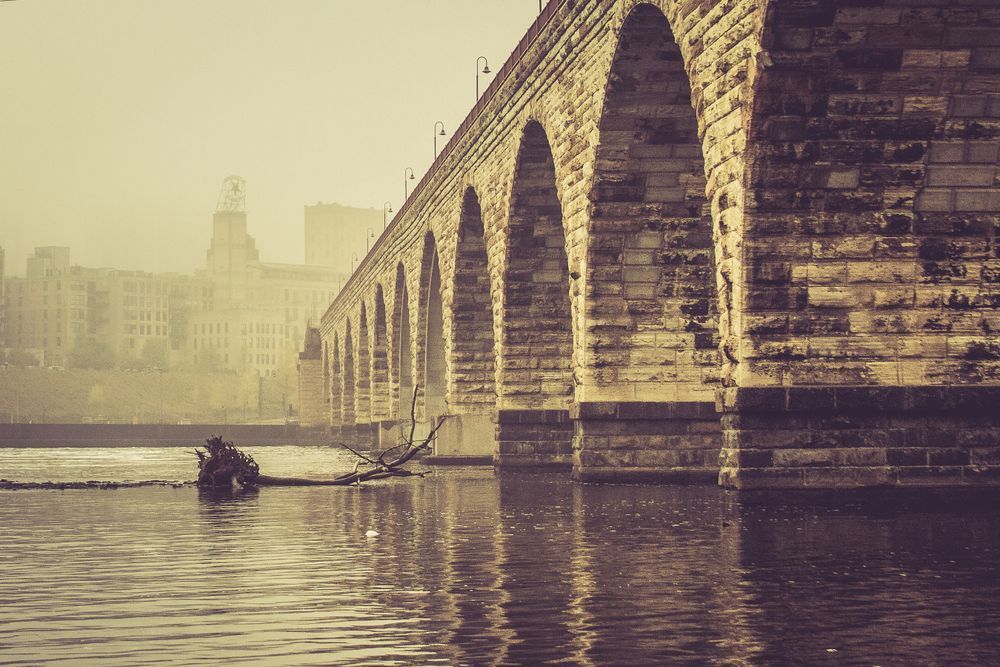
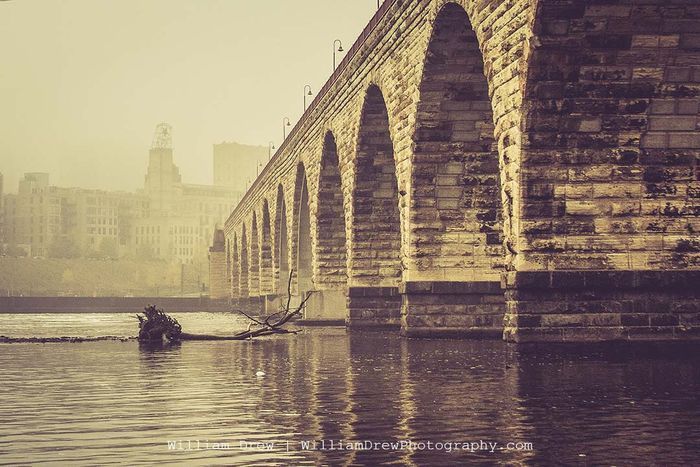
It was October 2013. A thick fog had settled over downtown Minneapolis, but unlike most fog, it wasn't city-wide. It was surgical. The skyscrapers were gone. The modern skyline, completely erased. But across the Mississippi, the Mill District's stone buildings stood untouched in the haze, just as they had for over a hundred years.
I noticed it from the car. I turned around, drove home, grabbed my camera, and headed straight for the St. Anthony Main riverbank.
Standing beneath the Stone Arch Bridge, one of my favorite spots in the city, I looked across the river and saw something I'd never seen before and haven't seen since: Minneapolis without the 21st century. The bridge's limestone arches stretched across the water. The old grain mills loomed through the mist. Not a single glass tower in sight.
I edited the image to lean into what nature had already done, giving it a warm, faded tone that echoes the sepia photographs from the bridge's own era. The result is something that looks less like a photograph and more like a document pulled from a historical archive.
Why canvas? The stone texture of the bridge, the soft gradations of fog, the aged warmth of the tones, all of it comes alive on canvas in a way that feels almost tactile. Buyers consistently choose canvas for this print, and it looks stunning in living rooms, offices, dens, and any space that values history and quiet drama.
This print has been one of my most quietly beloved images for over a decade. It doesn't grab you from across the room the way my color work does. But when you find it, really find it, it holds you.
My work has been featured at Minneapolis–St. Paul International Airport (Terminal 1) and the Minneapolis Convention Center, and can be seen in person at my studio in Gallery Aurora at the Northrup King Building, Minneapolis.
Why is this image sepia-toned instead of color? Because the fog already did most of the work. On the day I captured this, the fog had completely erased the modern skyline — leaving only the Stone Arch Bridge and the 1800s-era mill buildings. The warm, faded tones in post-processing were a deliberate choice to honor what nature handed me: a scene that looked genuinely pulled from another century.
Why does it look like an old photograph? That's exactly the intent. The Stone Arch Bridge was completed in 1883, and the mill buildings visible through the fog date to the same era. When the fog wiped out every modern structure, what remained was essentially a 19th-century riverscape. The edit reinforces what was already true about that moment.
Is this a real photograph or digitally altered? It's a real photograph taken on location at the St. Anthony Main riverbank in October 2013. The sepia tone and softened atmosphere are applied in post-processing — but the fog, the absence of the skyline, the driftwood in the river — all of it was exactly as you see it. Nothing was added or removed.
Where exactly was this taken? Beneath the Stone Arch Bridge on the east bank of the Mississippi River, looking northwest toward the Mill District. It's a spot I return to often — but I've never seen it look like this before or since.
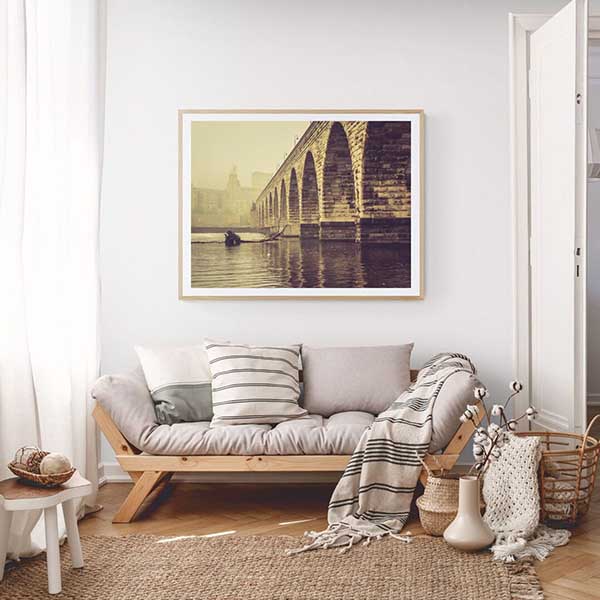
What size canvas works best for this print? This image rewards size. The detail in the limestone arches and the gradations of fog across the water become significantly more immersive at larger dimensions. Most buyers choose 20×30 or larger. If you're placing it above a sofa, fireplace, or bed, go bigger than you think you need — this is one of those prints that earns the wall.
What rooms does this work best in? Living rooms, home offices, dens, and libraries — anywhere that rewards a moment of quiet attention. The warm tones pair naturally with wood, leather, brick, and linen. It's also a strong choice for hospitality spaces like hotel lobbies, restaurants, and boutique Airbnbs where a sense of local history and place matters.