The Fine Art Buyer’s Guide: Photography Edition
Choosing fine art photography isn’t just about picking an image you love, it’s about choosing how that image will live in your space. Material, size, light, and placement all shape how a photograph feels once it leaves the screen and becomes part of your home.
This guide is designed to help you make confident decisions, avoid common pitfalls, and choose artwork that looks intentional, not accidental.
1. Choosing Your Material
The material you choose changes how your artwork looks, feels, and interacts with light. There is no “best” option, only the right one for your space and the mood you want to create.
Metal
Metal prints deliver bold color, deep contrast, and razor-sharp detail. They feel modern, luminous, and dynamic — especially for nighttime cityscapes and high-contrast scenes.
Best for:
- Living rooms
- Offices
- Contemporary interiors
- Statement walls
- Bright or well-lit spaces
If you want your art to command attention, metal is a powerful choice.
Acrylic
Acrylic prints are the most premium presentation I offer. Your image is mounted behind crystal-clear acrylic, giving it extraordinary depth and vibrancy — almost as if the photograph is floating off the wall.
Best for:
- Large statement pieces
- Entryways and lobbies
- Modern interiors
- High-impact installations
Acrylic is for collectors who want their art to feel gallery-grade and unmistakably luxurious.
Canvas
Canvas offers warmth, texture, and a softer, more painterly feel. Colors are slightly gentler than metal, which makes canvas ideal for calm or atmospheric images.
Best for:
- Bedrooms
- Cozy living rooms
- Scenic landscapes
- Spaces where you want a relaxed, organic presence
If you want your art to soothe rather than shout, canvas is a great fit.
Fine Art Paper
Fine art paper is a timeless, museum-inspired choice that looks beautiful framed. It offers rich tonal depth and subtle texture without glare.
Best for:
- Traditional interiors
- Curated gallery walls
- Collector framing
- Spaces where elegance matters more than drama
If you love classic photography presentation, fine art paper is the most refined option.
2. How Big Is Too Big? (It Isn’t)
Most people choose artwork that is too small, not too large.
A simple rule of thumb:
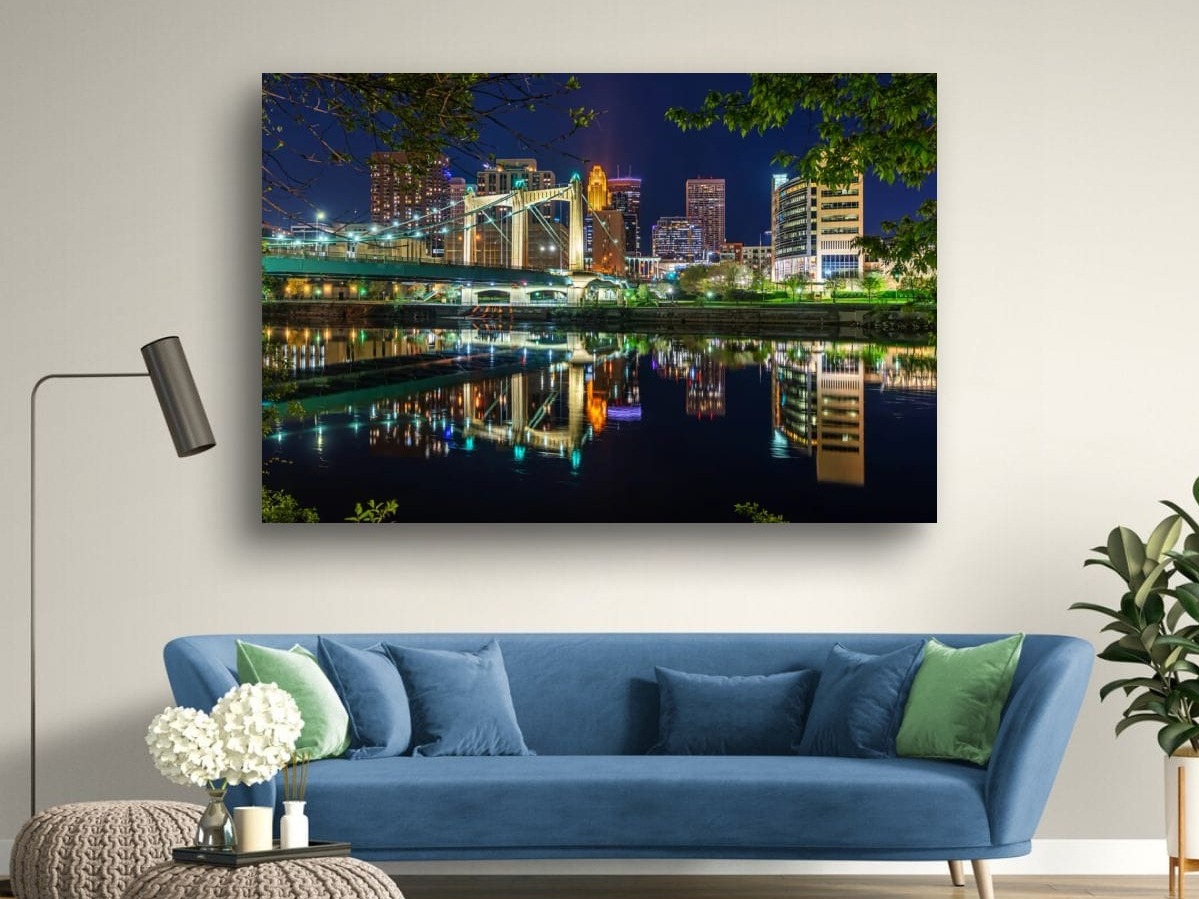
Your art should fill 60–75% of the width of the furniture beneath it.
For example:
- Over a 72-inch sofa → aim for artwork 45–54 inches wide
- Over a bed → the art should feel like a focal point, not an afterthought
- In an entryway → go bigger than you think; first impressions matter
Large art doesn’t overwhelm a room, it anchors it.
If a piece feels bold at first, live with that feeling for a day or two. Most people find they quickly prefer the larger scale.
3. Why Your Screen Lies
Your phone, tablet, or computer screen does not show you how your art will look in real life.
Three things change in person:
Color
Screens are backlit; walls are not. Colors often appear richer and more dimensional on your wall than on a device.
Scale
A print that looks big on your phone can feel small on a 12-foot wall. That’s why visualization tools or taping sizes on your wall are so helpful.
Light
Room lighting transforms artwork. A piece that feels moody on your screen may feel dramatic, warm, or expansive once printed and illuminated.
That’s why I recommend using in-home visualization via my Live Preview AR tool, which is available on most prints or marking dimensions on your wall before ordering.
4. When to Choose Custom Sizes
Standard sizes work well for most spaces, but sometimes your wall deserves something unique.
Custom sizes are ideal when:
- Your wall is unusually tall or wide
- The artwork sits above a large sectional or bed
- You want a gallery-scale statement piece
- You’re designing a commercial or hospitality space
- You want a panoramic or mural effect
If your wall feels special, your art should match it. Custom sizing lets you design the piece around the space instead of forcing the space to fit the piece.
You can always contact me to discuss custom dimensions, I’m happy to help you get it right.
5. Caring for Your Art
Proper care keeps your artwork looking beautiful for decades.
For Metal & Acrylic
- Dust gently with a microfiber cloth
- Avoid harsh cleaners or paper towels
- Keep out of direct, intense sunlight
For Canvas
- Dust lightly with a soft cloth
- Avoid humid areas like bathrooms
- Keep away from direct heat sources
For Fine Art Paper (Framed)
- Use UV-protective glass when possible
- Avoid direct sunlight
- Keep framed prints in stable indoor temperatures
Handled with care, your artwork will remain vibrant, crisp, and meaningful for years to come.
Ready to Choose Your Piece?
Browse the Signature Collection or use in-home visualization on most prints to see how your favorite image looks on your wall before you buy.
Your perfect piece is closer than you think.
Still have questions? I’d love to help you personally. Reach out anytime, or visit my studio at the Northrup King Building in Minneapolis to see my photography in person. You can also sign up for my newsletter to get updates on new releases, special collections, and more art buying tips.